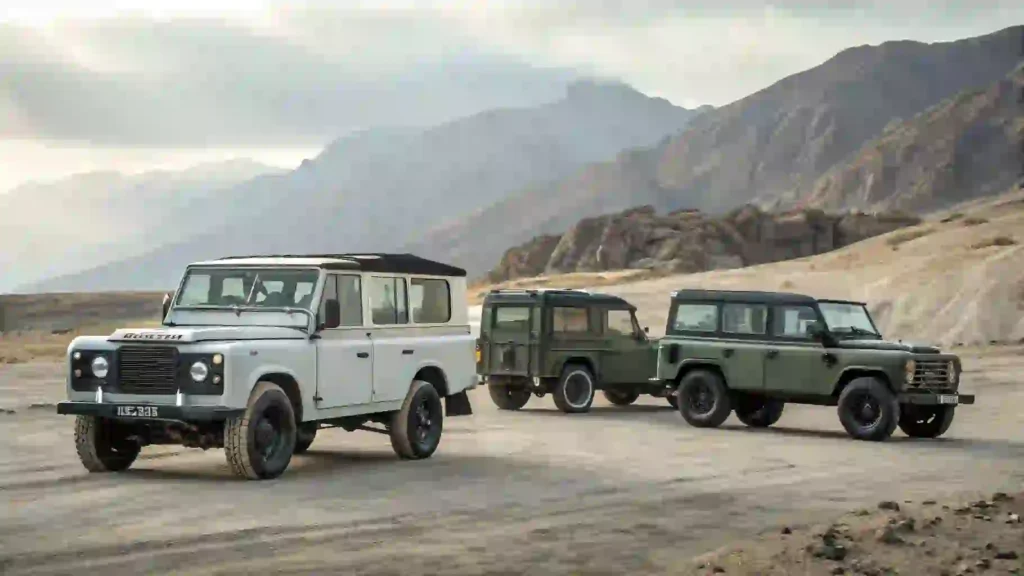

Introduction to Land Rover: A Brief Overview
Land Rover, a distinguished name in the automotive industry, is widely recognized for its rugged off-road vehicles that have evolved significantly since their inception. Founded in 1948 by Maurice Wilks, the brand’s roots are steeped in military heritage, which helped establish it as a manufacturer capable of producing vehicles designed to withstand challenging conditions. The Land Rover series, initially developed for agricultural and military use, gradually adapted to meet consumer demands, ultimately achieving a status of icon in the SUV market.
At the core of Land Rover’s reputation is the commitment to durability and versatility. Each model, be it equipped with a Land Rover diesel engine, petrol engine, or hybrid engine, is engineered for optimal performance in diverse terrains. This versatility is pivotal for both recreational adventurers and professionals requiring reliable utility in demanding environments. Additionally, the brand’s introduction of electrically powered options, including the Land Rover electric engine, signifies its stride towards sustainability while maintaining performance integrity.
Throughout its history, Land Rover vehicles have been characterized by their robust construction and off-road capabilities, appealing to a broad spectrum of consumers. This odyssey from military-focused designs to luxury SUVs demonstrates the brand’s adaptability and innovative spirit. Today, the luxury and refinement of the Land Rover models complement their rugged lineage, rendering them a choice symbol among off-road enthusiasts and urban drivers alike.
As we explore the history of Land Rover, it becomes evident how this brand not only shaped the vehicle landscape but also left an indelible mark on automotive culture. With a continuous commitment to enhancing their offerings, whether through advanced petrol technologies or electric alternatives, Land Rover remains a formidable presence that adapts while honoring its storied past.
The Origins of Land Rover: WWII and Early Development
The inception of Land Rover can be traced back to the late 1940s, a period marked by the aftermath of World War II, when there was an increasing demand for robust vehicles suitable for both agricultural and military purposes. Maurice Wilks, the chief designer at Rover, recognized this necessity and set to work on a versatile vehicle that could address these requirements. The vision culminated in the first Land Rover prototype, which was introduced to the public in 1948.
Influenced by the utility of military vehicles during the war, this early model featured a rugged design and was engineered to tackle a wide range of terrains. The prototype was built on the chassis of the Willys Jeep, a testament to the functionality and resilience that was required in wartime. These military influenced features were critical as they not only appealed to civilian markets post-war but also ensured that the model performed admirably in challenging conditions. The Land Rover diesel engine was one of the distinctive features that enhanced its capabilities, particularly in rural and rugged applications.
By 1948, the first production model was launched, quickly gaining traction among farmers, tradesmen, and adventurers alike. The early Land Rover was predominantly utilitarian, equipped with a simple, no-frills design aimed at ensuring durability and efficiency rather than luxury. As demand soared, Land Rover began to experiment with various engine configurations, including the exploration of the petrol engine, which offered a different appeal to specific market segments. Over the years, this initial military innovation evolved into a symbol of adventurous spirit, marking the beginning of Land Rover’s storied history in vehicle manufacturing.
The Iconic Series Models: A Testament to Durability
The Land Rover brand has long been synonymous with durability and versatility, and its Series models are a testament to these qualities. Founded in 1948, the Series I was a groundbreaking vehicle that combined ruggedness with utility. Designed predominantly for agricultural use and light military service, the Series I featured a robust metal body atop a simple chassis, allowing for significant adaptability in challenging terrains. Its innovative design, characterized by its bulkhead and distinctive clamshell bonnet, set the stage for future models.
With the introduction of the Series II in 1958, enhancements in both style and performance became apparent. The Series II included a slightly more streamlined body shape, larger windows for increased visibility, and a more comfortable interior that still adhered to the utilitarian ethos that Land Rover was known for. This model further emphasized the brand’s commitment to expansion beyond military applications, appealing to outdoor enthusiasts and explorers alike. The incorporation of the land rover diesel engine option in this series provided better fuel efficiency, aligning with growing demands for more economical vehicles.
The Series III, launched in 1971, further refined these concepts by introducing features that improved driving experience such as servo-assisted brakes and a more spacious cabin. This model also marked the last of the classic Land Rovers, mirroring the changing landscape of both consumer preferences and the automotive industry. It is essential to highlight that throughout these generations, Land Rover’s commitment to producing a versatile vehicle remained constant, paving the way for the future of SUVs including the latest land rover hybrid engine and even the land rover electric engine options.
Overall, the Series models illustrate Land Rover’s enduring relevance in the automotive world. Their legacy continues to influence modern designs and technologies, further cementing Land Rover’s reputation as a reliable companion for exploration and adventure.
The Evolution of Technology: Advancements in Engineering
Since its inception in 1948, Land Rover has been synonymous with innovation and engineering excellence. The brand has continuously evolved its technology, ensuring that each vehicle is equipped to handle a diverse range of terrains and conditions. A significant breakthrough in their lineup has been the advancement of four-wheel-drive systems. These systems have undergone remarkable improvements, allowing for better traction, stability, and control compared to earlier models. Today, many Land Rover vehicles feature sophisticated terrain response systems that automatically adjust drive parameters for specific conditions, ensuring peak performance.

In addition to four-wheel-drive capabilities, suspension technologies have seen significant enhancements over the years. Early models relied on basic leaf-spring suspension systems, which limited comfort and handling. However, modern Land Rover models now utilize advanced air suspension technologies. This allows for adjustable ride height and improved comfort over rough terrains, considerably enhancing the driving experience whether on-road or off-road.
Moreover, Land Rover has embraced electronic aids that have redefined safety and performance standards. Driver assist technologies such as adaptive cruise control and blind-spot monitoring not only improve safety but also make driving more enjoyable. The introduction of hybrid and electric engines further represents the brand’s commitment to sustainable engineering. The Land Rover diesel engine has provided long-range capabilities, while the move towards petrol and hybrid engines reflects a shift to more environmentally friendly options. Embracing electric technology, Land Rover is preparing to launch electric engines that align with global sustainability goals. These advancements showcase Land Rover’s dedication to blending traditional ruggedness with modern sophistication and efficiency.
Cultural Impact: Land Rover in Media and Society
The Land Rover has established itself not only as an automobile but as a cultural icon, deeply woven into the fabric of media and societal perceptions of adventure and exploration. Since its inception, the Land Rover diesel engine variants, along with its petrol and hybrid engines, have been portrayed as reliable companions in rugged terrains, setting the stage for their appearances in various cinematic and television narratives.
Numerous films have featured the Land Rover as a vehicle of choice for explorers, adventurers, and heroes, allowing audiences to connect with the notion of a daring lifestyle. The brand’s rugged design and functionality make it the ideal vehicle for on-screen exploration, making it synonymous with off-road adventures. Classic films and series have frequently showcased the Land Rover traversing vast landscapes, from the African savannah to the snowy peaks of the Himalayas, reinforcing the image of this vehicle as a gateway to freedom and exploration.
The cultural significance of Land Rover extends beyond the screen. In many societies, driving a Land Rover signifies an active outdoor lifestyle, appealing to those who embrace the spirit of adventure. This connection has been highlighted in documentaries and travel programs, where the Land Rover hybrid engine options are praised for their capacity to handle diverse terrains while minimizing environmental impact. Furthermore, the rise of the Land Rover electric engine symbolizes a shift towards sustainable exploration, mirroring the values of modern explorers who seek to balance adventure with environmental responsibility.
Today, the Land Rover brand serves as a testament to resilience and versatility, increasing its influence in lifestyle branding. Whether in the wilderness, urban landscapes, or on screen, Land Rover remains a powerful symbol of adventure and an enduring icon in culture and society.
Shifting Gears: The Transition to Freestyle SUVs
The evolution of Land Rover from a utilitarian vehicle manufacturer to a pioneer of luxury SUVs is a testament to its innovative spirit. The transformation began with the introduction of the Range Rover in 1970, a model that combined high-end luxury with the rugged capabilities characteristic of Land Rover. This vehicle played a crucial role in establishing the brand’s new direction, introducing a market segment that appealed to those who sought both adventure and comfort.
Following the success of the Range Rover, Land Rover expanded its lineup to include the Discovery and Range Rover Sport. The Discovery, launched in 1989, catered to families and adventurers alike, featuring a spacious interior along with off-road capability. It was specifically designed to bridge the gap between weekend explorers and those requiring a versatile everyday vehicle. The blend of practicality and luxury in the Land Rover diesel engine options enhanced appeal, positioning the Discovery as a formidable contender in a growing SUV market.
Furthermore, the introduction of the Range Rover Sport in 2005 marked Land Rover’s commitment to a sporty yet refined driving experience. With its dynamic design and agile performance, the Sport captivated a younger audience seeking high-performance without sacrificing the brand’s rugged roots. The shift to hybrids and electric engines showcased Land Rover’s willingness to adapt to changing environmental pressures, introducing models that maintained the brand’s rich heritage while addressing modern consumer demands.
As the automotive industry evolved, Land Rover embraced new technologies, including sophisticated petrol and diesel engines, alongside innovative hybrid and electric powertrains. This diversity ensured that Land Rover vehicles remained at the forefront of both performance and sustainability, appealing to a demographic that increasingly prioritizes eco-friendliness without compromising on luxury or capability.
Challenges and Triumphs: Land Rover Through Ownership Changes
Founded in 1948, Land Rover began as a brand firmly rooted in the British automotive industry, producing versatile vehicles suited for both civilian and military use. Its distinctiveness arose from the rugged design and capability of its vehicles, significantly marked by models powered by the innovative land rover diesel engine. However, as Land Rover navigated its way through various ownership changes, from its origins to its acquisition by BMW in 1994, the brand faced notable challenges and triumphs that shaped its identity.
During the BMW era, significant investments revitalized the Land Rover lineup, leading to the introduction of more advanced technologies in the land rover petrol engine offerings, which enhanced performance and efficiency. BMW’s ownership marked an era of modernity and expansion, during which Land Rover gained access to a broader array of technological resources. Yet, the complexity of managing a luxury brand under a larger automotive conglomerate posed its challenges, impacting the brand’s marketing and consumer perceptions.
The acquisition of Land Rover by Tata Motors in 2008 marked another pivotal turn. This ownership brought renewed vigor and a commitment to innovation, particularly in areas like hybrid and electric propulsion systems, including the emerging land rover hybrid engine and land rover electric engine. Tata Motors’ global perspective and financial backing allowed Land Rover to expand its offerings while preserving its core identity as a luxury off-road vehicle manufacturer. Under this new ownership, Land Rover has successfully achieved a balance between heritage and modernity, continuing to produce vehicles that appeal to both traditional enthusiasts and a new generation of environmentally conscious drivers.
Indeed, the transitions between ownership have presented both challenges and opportunities for Land Rover. The brand’s resilience in maintaining its rich legacy while evolving with new technologies underscores its position in the automotive landscape.
Environmental Considerations: Towards Sustainable Developments
As global awareness of environmental issues continues to rise, automotive manufacturers, including Land Rover, are adapting their strategies to meet sustainability challenges. Historically, Land Rover has been synonymous with rugged performance and adventure, thanks in part to their robust diesel and petrol engines that have catered to many driving enthusiasts. However, in response to the growing demand for eco-friendly alternatives, the company has begun to pivot towards more sustainable technologies.
In recent years, Land Rover has expanded its product range to include hybrid and electric engines. The shift to the Land Rover hybrid engine represents a significant step in reducing carbon emissions while maintaining the brand’s reputation for performance and capability. The introduction of the Land Rover electric engine underscores the commitment to producing zero-emission vehicles that align with global climate goals. This transition not only helps to reduce the environmental impact of their vehicles but also positions Land Rover as a forward-thinking player in an increasingly eco-conscious market.
Moreover, Land Rover’s commitment extends beyond just vehicle development. The company has launched numerous initiatives aimed at preserving natural habitats and promoting conservation. Through partnerships with organizations dedicated to environmental sustainability, Land Rover actively works on projects that support wildlife conservation, such as reforestation efforts and protection of endangered species. By embedding sustainability into its core values, Land Rover strives to ensure that future generations can enjoy the great outdoors without compromising the ecological balance.
In conclusion, Land Rover is making significant strides towards reducing its carbon footprint by embracing innovative technologies such as the land rover hybrid engine and electric engine. The focus on sustainability not only enhances the brand’s legacy but also contributes positively to the global effort in combating environmental degradation.
The Future of Land Rover: Innovations on the Horizon
The automotive industry is undergoing a significant transformation, and Land Rover is at the forefront of innovative developments aimed at meeting the demands of contemporary drivers. As environmental concerns become increasingly prominent, the transition toward sustainable energy sources is crucial. Land Rover is expanding its portfolio to include not only efficient diesel engines but also petrol and hybrid engine options, as well as a comprehensive exploration of electric engine technologies.
The Land Rover diesel engine has long been celebrated for its torque and fuel efficiency, ideal for both on-road and off-road capabilities. However, as cities embrace stricter emissions regulations, the necessity for cleaner alternatives has never been more apparent. In response, Land Rover is investing in hybrid technology that combines traditional internal combustion engines with electric power. This is expected to enhance performance while significantly reducing carbon footprints, addressing both environmental concerns and consumer preferences.
Looking ahead, the advent of Land Rover’s electric engine signifies a pivotal shift. With advancements in battery technology and infrastructure enhancements, fully electric models are anticipated to deliver the iconic Land Rover experience without the reliance on fossil fuels. Moreover, Land Rover is increasingly incorporating autonomous technology into its future designs. This innovation not only aims to elevate safety standards but also enhance passenger comfort and convenience, aligning with trends seen across the automotive sector.
As the future unfolds, Land Rover’s focus on integrating cutting-edge technologies and environmental sustainability demonstrates a dedication to evolving with the automotive landscape. By combining the performance of their well-established diesel and petrol engines with the promising potential of hybrid and electric engines, Land Rover is poised to maintain its status as a leader in versatile and capable vehicles.